


The AI-agent lifecycle does not end at deployment. For many organizations, the hardest part begins after an AI agent goes live—when it starts handling real customer or business transactions. At this stage, AI agents often become black boxes: you see results, but you do not see the underlying reason “why.” That opacity makes tuning slow, erodes trust, and severely limits scale. This is where AI Agent Observability becomes essential, giving teams visibility into how agents think, decide, and act.
With the rapid acceleration of enterprise AI adoption, a surge of 282% in implementations recently, according to Salesforce, the company behind Agentforce—teams urgently need a way to monitor, understand, and continuously improve AI agent performance. (Reuters Salesforce AI Adoption:https://www.reuters.com/business/media-telecom/salesforce-raises-annual-revenue-forecast-2025-12-03/)
Recognizing this, Salesforce has introduced a comprehensive observability layer inside Agentforce—turning “deploy-and-forget” AI into “deploy-monitor-optimize” AI.
What is New in Agentforce: Observability Tools at a Glance
Agentforce’s new AI Agent Observability capabilities are built around three core pillars: analytics, optimization & traceability, and health monitoring.
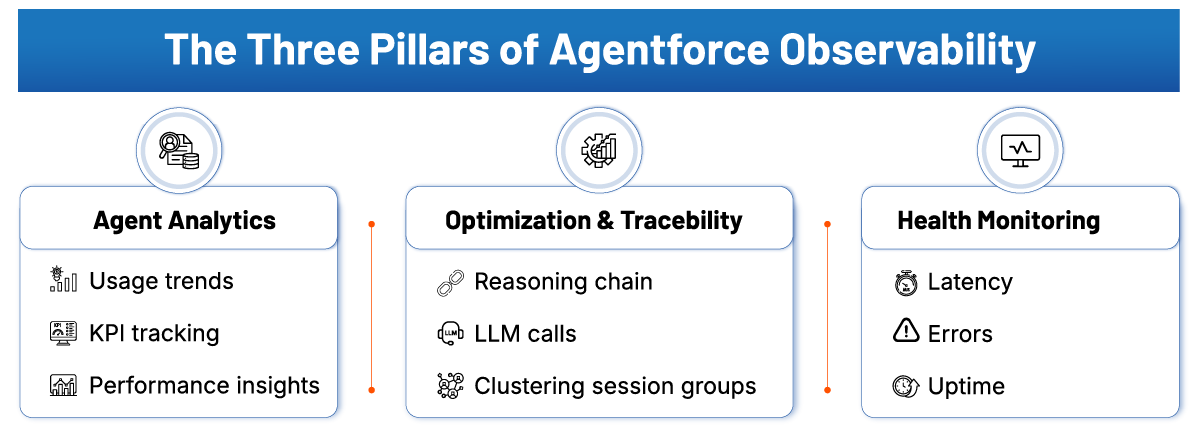
- Agent Analytics—Continuous Refinement
- Provides a panoramic view of how each deployed agent is performing: how frequently they are used, how effective they are, and key performance over time.
- Surfaces trends in KPIs, so teams can spot improvements or regressions early.
- Offers actionable insights: identify ineffective topics, broken flows, or low-quality responses—and correct them proactively.
- Agent Optimization & Traceability—Understanding “Why” Agents Do What They Do
- Full end-to-end visibility into each agent interaction: from user input to AI reasoning chain to output. These frameworks provide visibility into the question, “Why did the AI respond this way?”
- Ability to cluster and group similar sessions to uncover patterns: recurring issues, friction points, and areas needing retraining or better guardrails. As pointed out in this study, Beyond Black-Box Benchmarking
- Enables fine-tuning of agent configurations based on real-world data while eliminating the need for guesswork.
- Agent Health Monitoring—Ensuring Reliability & Trust at Scale
- Near real-time monitoring of agent status: uptime, latency, error rates, escalations, etc.—giving early warning for performance degradation.
- High-speed alerts for anomalies, enabling rapid investigation and remediation before customer experience suffers.
- Built for scale—so organizations managing many agents can maintain enterprise-grade reliability and resilient operations.
This IBM report, “How Observability Is Adjusting to Generative AI,” argues that traditional telemetry must be augmented with AI-specific metrics to provide meaningful observability for probabilistic systems like large language models.
How is AI Agent Observability Built?
To make all this possible, Salesforce has grounded AI Agent Observability in two critical pieces of infrastructure:
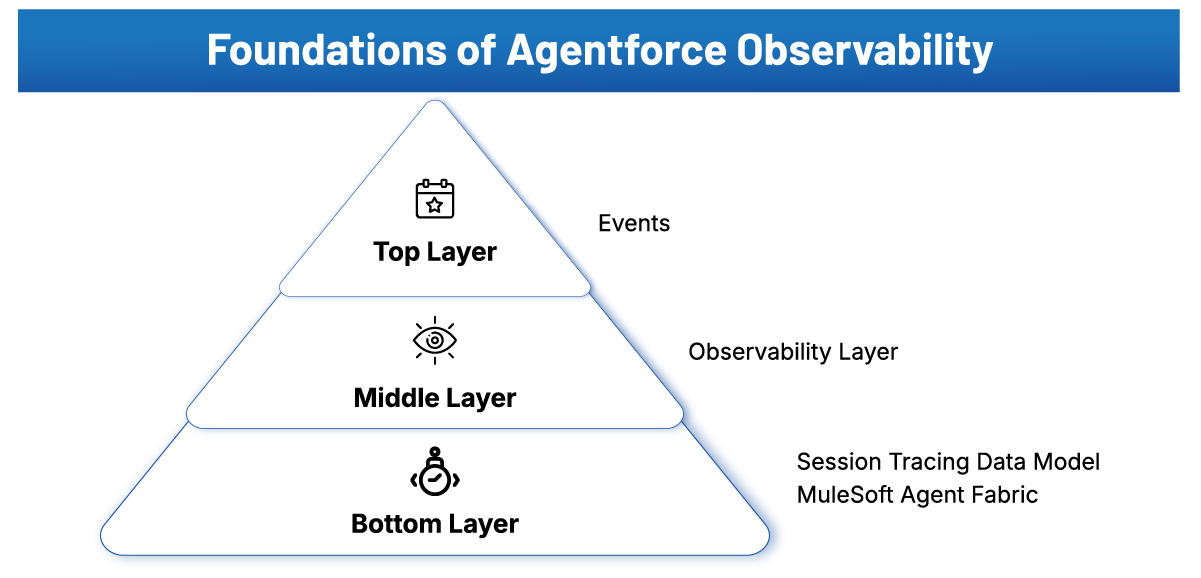
Together, these foundations give enterprises end-to-end control, visibility, and governance over their “digital workforce.”
Why AI Agent Observability Matters for Enterprises: Benefits & Use Cases
Early feedback from customers deploying Agentforce with observability—including companies like 1‑800Accountant, Engine, and Nexo—underscores the business value.
- Better transparency builds trust internally: leaders can see exactly how agents make decisions, which helps with buy-in and accountability.
- Faster scaling of AI usage across teams: with reliable insights and metrics, businesses can confidently expand AI agent use beyond pilots in customer service, operations, sales, or internal workflows.
- Reduced operational risk: real-time alerts and health monitoring help detect issues before they impact customers.
- Continuous improvement loop: analytics and optimization make it easier to retrain, refine, or adjust agents based on real-world usage—not just initial tests.
In short, AI agents become not just powerful automation tools but reliable, manageable, and evolving teammates.
What do Agent Observability Tools Means for the Future?
With these observability tools, Salesforce is signaling that the industry is moving beyond AI pilots and experiments. The real challenge—as well as opportunity—lies in seamless integration and scaling of AI across the enterprise with confidence, control, and continuous improvement. As Salesforce puts it, “You can’t scale what you can’t see.”
For organizations evaluating AI adoption, AI Agent Observability should not be an afterthought—it is now a non-negotiable part of the agent’s lifecycle. With Agentforce, businesses get that built in.
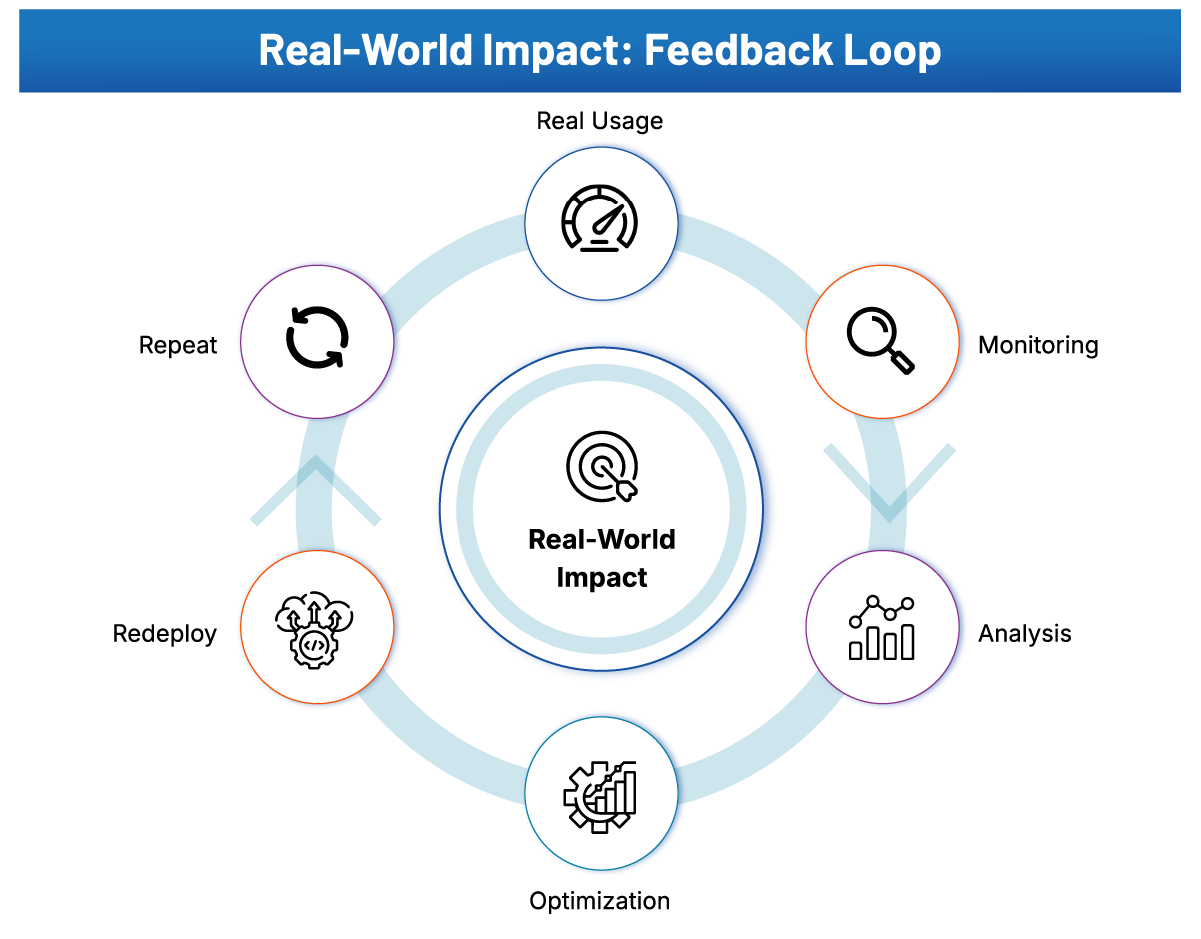
If you are evaluating enterprise-grade AI tools, this is a major signal: AI is no longer just a novelty. With proper observability, it is now a robust and scalable pillar of business operations. If you are looking to leverage AI and observability tools, you will need an expert like Evoke Technologies to get you up and running. Evoke’s in-house specialists for Salesforce Agentic AI can help your business with the Agentforce 360 platform.
Connect with us to find out more.